Arsenic: A metalloid with dual roles in industry and toxicity
Metalloids like arsenic exhibit properties of both metals and nonmetals, enabling versatile applications in alloys, electronics, and chemical compounds. Arsenic is especially known for its toxicity, but it also plays a critical role in semiconductors, wood preservation, and pesticide formulations.
Though widely recognized for its toxic effects, arsenic is crucial in industrial chemistry, contributing to gallium arsenide semiconductors, lead alloys, and specialized glass. Understanding arsenic's chemical behavior is essential for safe handling and leveraging its beneficial applications.
This article explores arsenic’s properties, natural occurrence, industrial applications, health implications, and key compounds.
Properties of arsenic
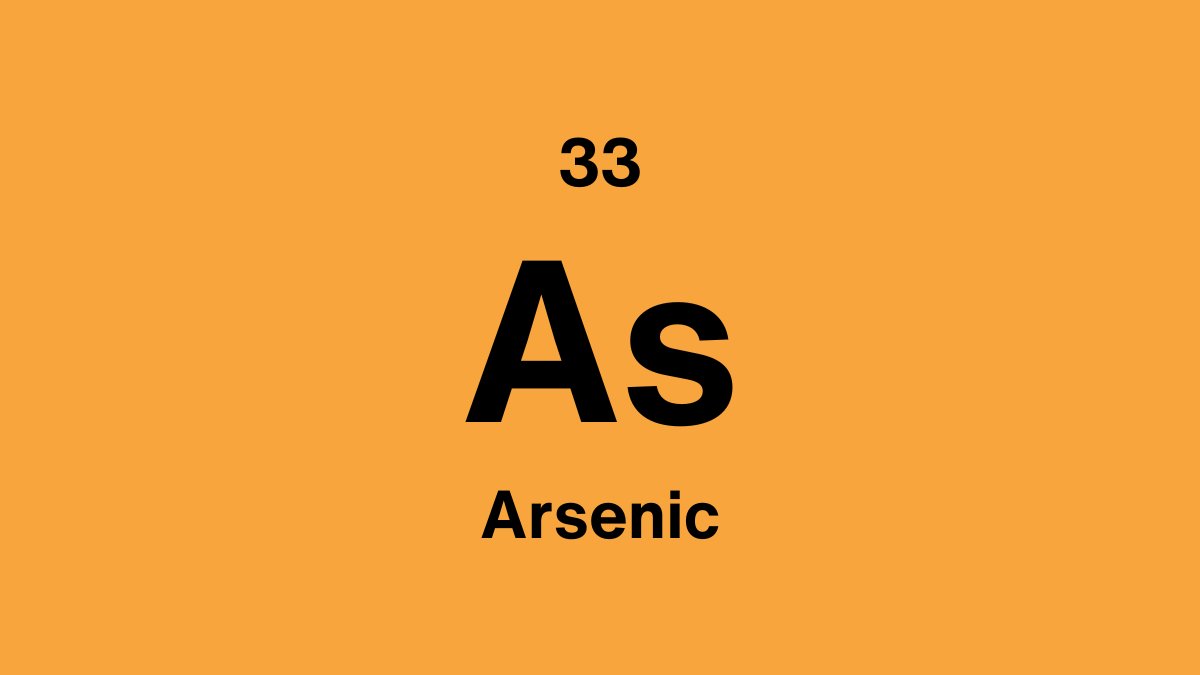
| Atomic Number: | 33 |
| Atomic Symbol: | As |
| Atomic Weight (amu): | 74.9216 |
| Electronegativity: | 2.18 |
| Melting point: | 817.00°C | 1503.00°F | 1090.15K |
| Boiling point: | 613°C | 1135°F | 886K (sublimes) |
What does arsenic look like?
Arsenic is a metallic grey metalloid with a shiny, crystalline appearance. Its surface can appear slightly iridescent when freshly cut. In nature, it occurs primarily as arsenic sulfide minerals, which are yellow, red, or brown in color.
Will we ever run out of arsenic?
Arsenic is relatively abundant in the Earth's crust, but most naturally occurring arsenic is bound in minerals. Extraction and refining are required for industrial use. While supply is generally stable, environmental regulations limit large-scale mining and use.
Can arsenic be recycled?
Yes, arsenic can be recovered from industrial waste streams, including:
- Byproducts of copper and gold refining
- Waste from pesticide production
- Spent semiconductors containing gallium arsenide
Where can arsenic be found?
Arsenic naturally occurs in minerals such as:
- Realgar (As4S4): A red arsenic sulfide mineral
- Orpiment (As2S3): Yellow arsenic sulfide
- Arsenopyrite (FeAsS): Iron arsenic sulfide, a common ore
Major arsenic producers include China, Morocco, and Russia. Arsenic is often extracted as a byproduct from copper and gold refining.
Is arsenic expensive?
Arsenic is not particularly rare but its price is influenced by regulatory controls, refining complexity, and industrial demand for semiconductors and wood preservatives.
Does arsenic have a biological role?
Arsenic is toxic to humans and animals in high concentrations. Trace amounts of arsenic have been studied for potential biological effects, but it is not considered an essential element for life. Chronic exposure can cause serious health issues.
What is pure arsenic used for?
- Semiconductors: Gallium arsenide (GaAs) is critical in electronics and solar cells
- Alloys: Small additions of arsenic improve lead alloys in batteries and ammunition
- Wood Preservation: Arsenic compounds are used to protect timber against decay
- Glass Manufacturing: Arsenic trioxide is used as a clarifying agent
- Pesticides and Herbicides: Historically used, though now highly regulated
What are the main compounds with arsenic?
- Arsenic Trioxide (As2O3) : Used in glass manufacturing, wood preservatives, and as a chemotherapeutic agent.
- Arsenic Sulfides (As4S4, As2S3) : Minerals used historically as pigments and in fireworks.
- Gallium Arsenide (GaAs) : A semiconductor material used in electronics, solar cells, and LEDs.
- Lead Arsenate : Previously used as a pesticide, now largely phased out.
Who discovered arsenic?
Arsenic has been known since ancient times, but it was first isolated in its elemental form in 1250 by Albertus Magnus. It was later studied and purified by various chemists in the 18th century, establishing its chemical properties.
Is arsenic dangerous?
Yes, arsenic is highly toxic in most forms. Chronic exposure can cause skin lesions, organ damage, and cancer. Industrial handling requires strict safety measures, proper ventilation, and protective equipment.
Fun facts about arsenic
- Arsenic compounds were historically used as pigments in paints and wallpapers.
- Gallium arsenide allows faster electronic devices than traditional silicon semiconductors.
- Arsenic can exist in multiple oxidation states, including -3, +3, and +5, influencing its chemical reactivity.
- Some bacteria can metabolize arsenic, allowing bioremediation of contaminated soils and water.
- Arsenic exposure in drinking water is a global health concern in regions like Bangladesh and India.
Scientific data verified from RSC, Britannica, and the Minerals Education Coalition.