Cadmium Uncovered: The Soft Metal Behind Batteries and Pigments
Cadmium is a soft, bluish-white transition metal with low melting point and excellent corrosion resistance. It is widely used in rechargeable batteries, metal coatings, pigments, and specialized industrial applications. Its compounds are carefully handled due to toxicity concerns.
In this article, we explore cadmium's properties, natural occurrence, industrial uses, and main compounds.
Properties of cadmium
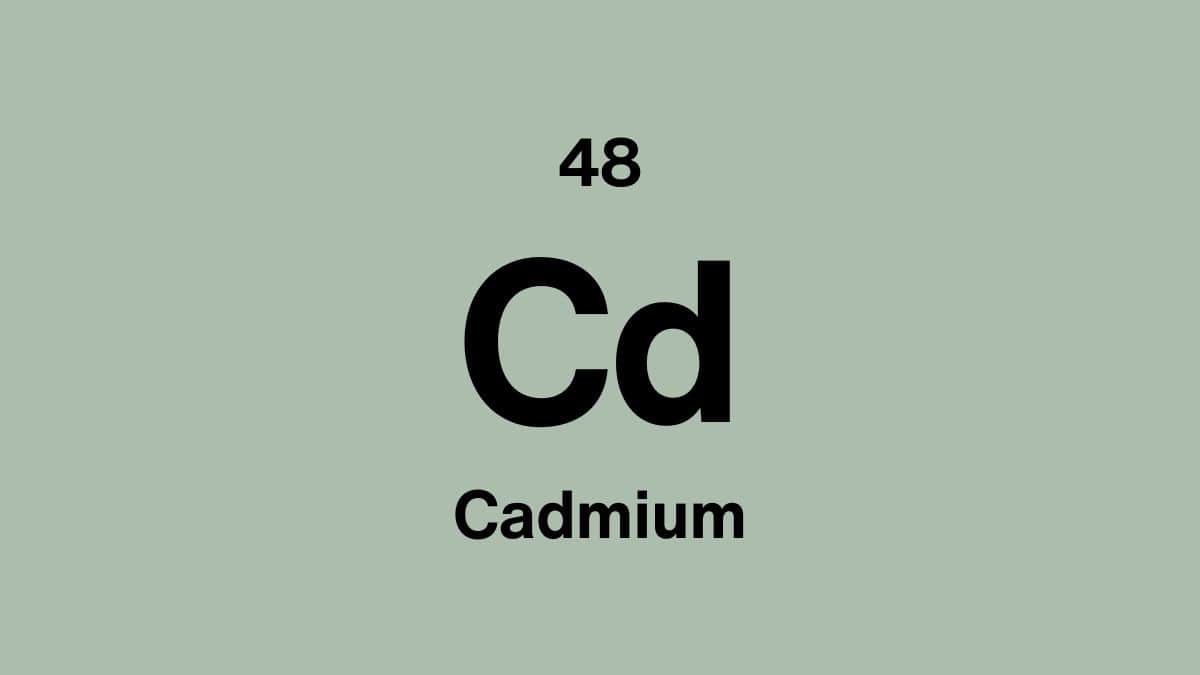
| Atomic Number: | 48 |
| Atomic Symbol: | Cd |
| Atomic Weight (amu): | 112.414 |
| Electronegativity: | 1.69 |
| Melting point: | 321.07°C | 609.93°F | 594.22K |
| Boiling point: | 767°C | 1413°F | 1040K |
What does cadmium look like?
Cadmium is a soft metal with a bluish-white metallic luster. It is malleable and easily cut with a knife, and it tarnishes slightly when exposed to air.
Will we ever run out of cadmium?
Cadmium is primarily obtained as a byproduct of zinc, lead, and copper mining. Although it is not extremely rare, careful resource management and recycling are important due to its toxicity.
Can cadmium be recycled
Yes, cadmium can be recycled from batteries, metal coatings, and industrial residues, reducing environmental impact and preserving resources.
Where can cadmium be found?
Cadmium is mainly obtained as a byproduct of zinc mining in countries like China, South Korea, Japan, and Canada. Its natural occurrence is typically in small quantities within sphalerite, greenockite, and other zinc ores.
Is cadmium expensive?
Cadmium is moderately priced due to its limited but manageable supply. The cost depends on market demand for batteries, pigments, and coatings.
Does cadmium have a biological role?
Cadmium has no known essential biological role and is toxic to humans and animals. Exposure can cause kidney damage, bone weakening, and other health issues, so safety precautions are critical in handling.
What is pure cadmium used for?
- Rechargeable Batteries: Cadmium is a key component in nickel-cadmium batteries.
- Metal Coatings and Plating: Provides corrosion resistance on steel and other metals.
- Pigments: Cadmium compounds are used to produce bright yellow, orange, and red pigments in paints and plastics.
- Specialized Alloys: Used in low-melting alloys and solders.
What are the main compounds with cadmium?
- Cadmium Sulfide (CdS) : Used as a yellow pigment and in photoresistors.
- Cadmium Oxide (CdO) : Used in batteries, coatings, and electroplating.
- Cadmium Chloride (CdCl2) : Used in electroplating and as a precursor in chemical synthesis.
Who discovered cadmium?
Cadmium was discovered in 1817 by the German chemist Friedrich Stromeyer. He found cadmium as an impurity in zinc carbonate, noting its distinct properties and bluish-white appearance.
Is cadmium dangerous?
Yes, cadmium and many of its compounds are toxic and carcinogenic. Exposure can occur through inhalation, ingestion, or skin contact, so strict safety protocols are required when handling it.
Fun facts about cadmium
- Cadmium is primarily a byproduct of zinc production and rarely mined directly.
- It has been used historically in pigments for plastics, ceramics, and paints due to its vibrant colors.
- Cadmium batteries were widely used in portable electronics before lithium-ion became dominant.
Scientific data verified from RSC, Britannica, and the Minerals Education Coalition.